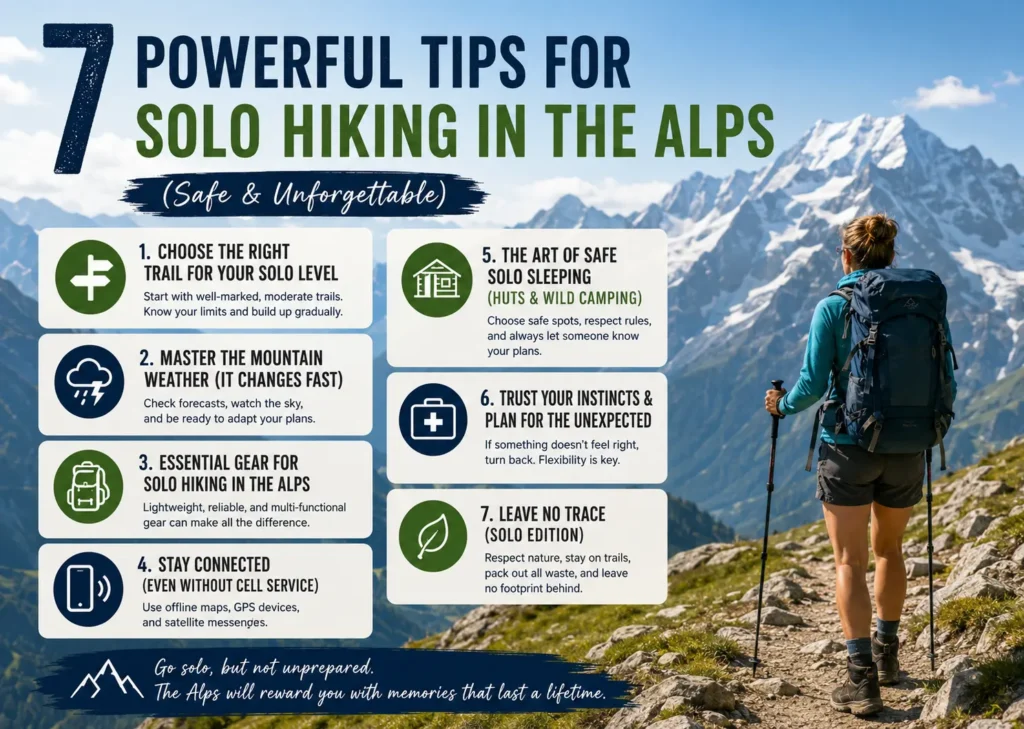
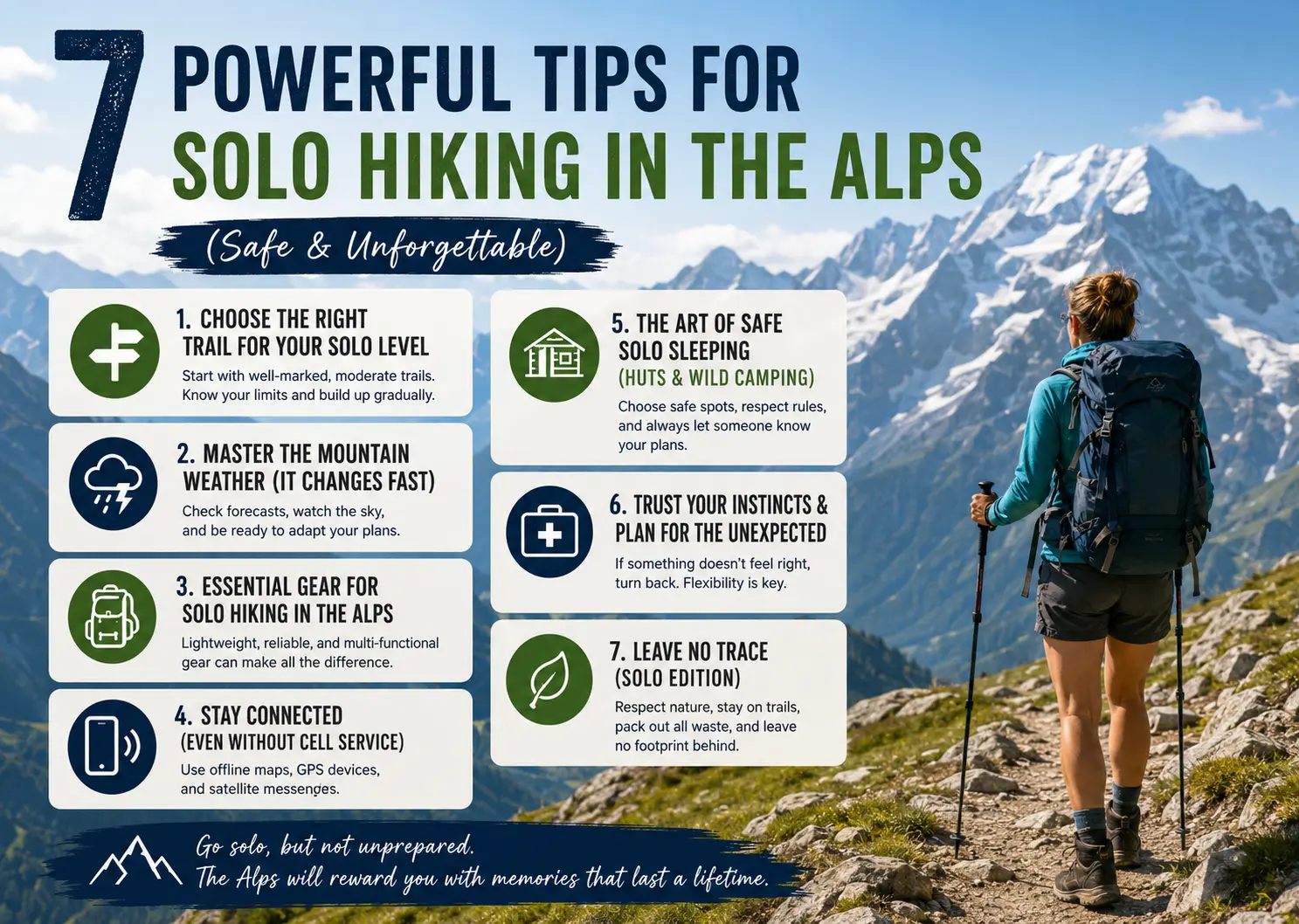
Powerful Tips for Solo Hiking in the Alps (Safe & Unforgettable)
Solo hiking in the Alps is life‑changing. Get 7 essential safety tips, trail recommendations, and packing advice for your solo Alpine adventure
You’ve dreamed of standing alone on a ridge with snow‑capped peaks all around you. But is solo hiking in the Alps safe? What if you get lost or the weather turns?
I’ve been there. That mix of excitement and fear.
In this guide, you’ll learn exactly how to plan, pack, and hike alone in the Alps with confidence. From choosing the right trails to staying connected, these seven tips will turn your solo mountain dream into a worry‑free reality.
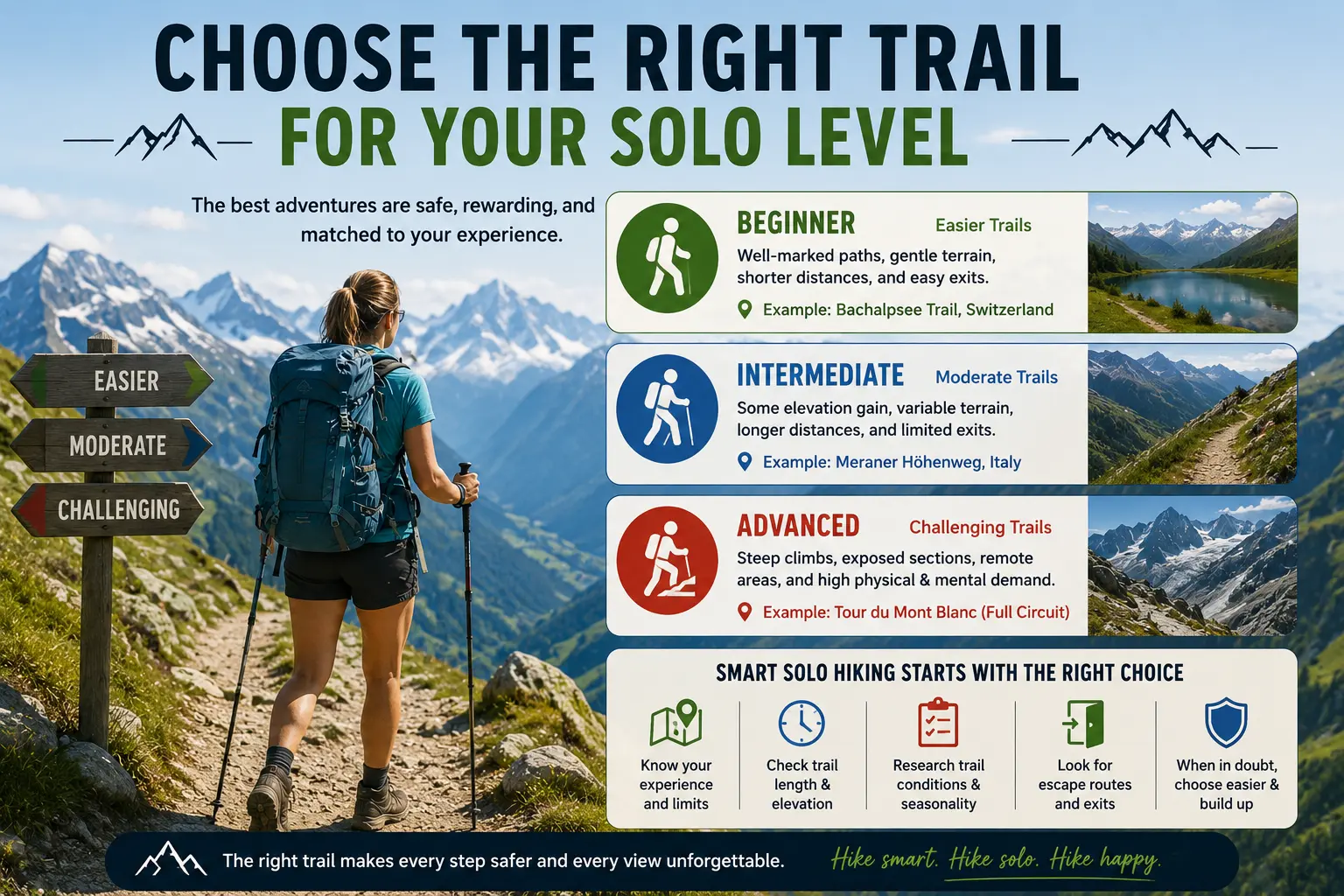
1. Choose the Right Trail for Your Solo Level
Choose the Right Trail for Your Solo Level
Not all Alpine trails are solo‑friendly. Start with well‑marked, popular routes where you’ll see other hikers every hour.
Look for:
Yellow signs: These indicate easy-to-moderate day trails (Switzerland/France).
Red‑white‑red markings for more advanced treks; avoid them as a first solo.
Hut to hut routes like the Tour du Mont Blanc are busy enough to be safe and quiet enough for solitude.
🧷 Worthy tip: “For your first solo hiking in the Alps, pick a trail with a mountain hut every 2‑3 hours. You’ll never feel truly alone.”
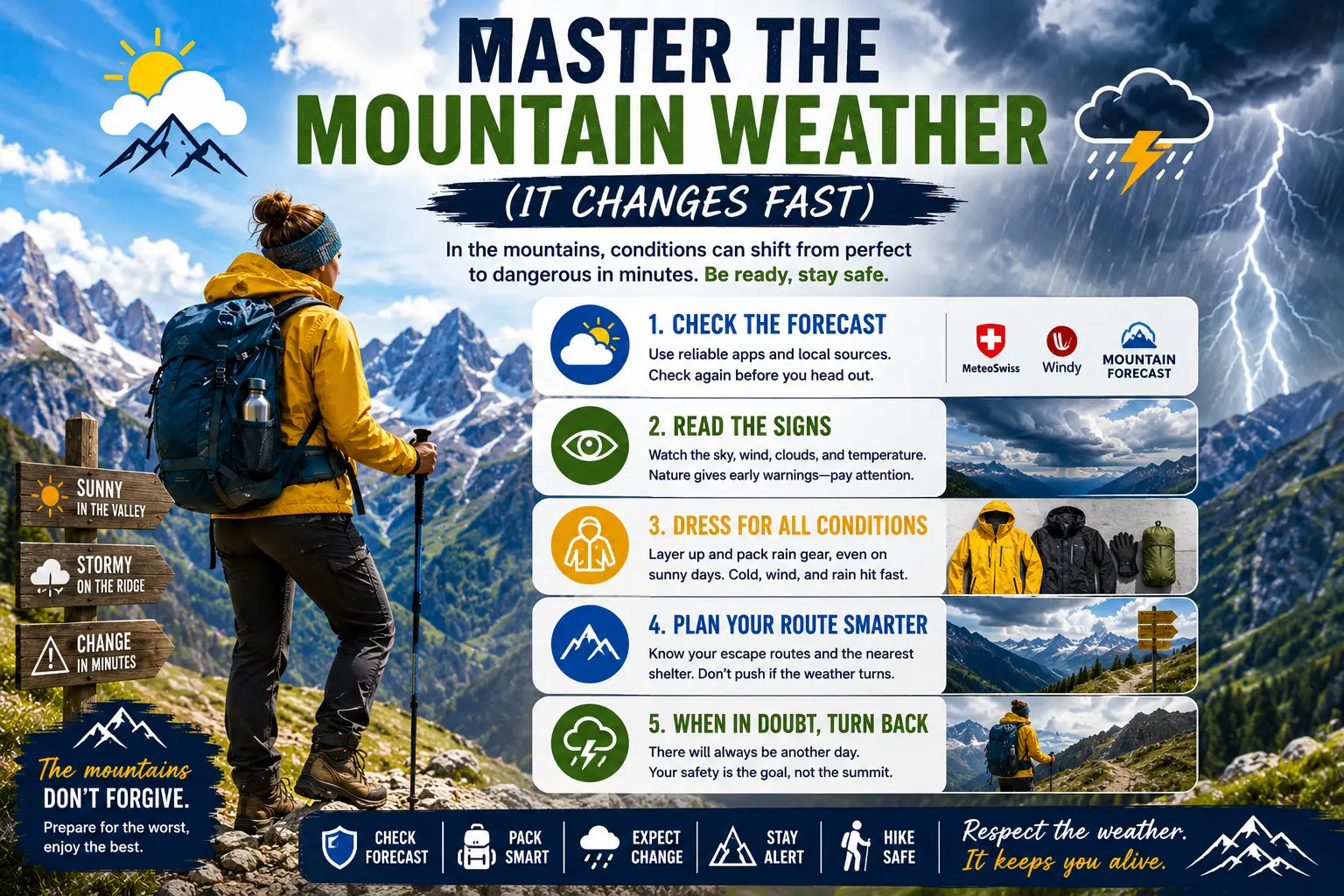
2. Master the Mountain Weather (It Changes Fast)
Master the Mountain Weather (It Changes Fast)
Alpine weather can shift from sunshine to snow in 20 minutes. As a solo hiker, you have no one to borrow a jacket from.
Your non‑negotiable pre‑hike routine:
Check two forecasts: MeteoSwiss (Switzerland) or Météo France.
Look at the webcam of your trailhead; live images never lie.
Learn the “3PM rule”: be below 2,000 m / 6,500 ft by 3 PM to avoid afternoon storms.
In the Alps, turning back is a win. The mountain will wait.
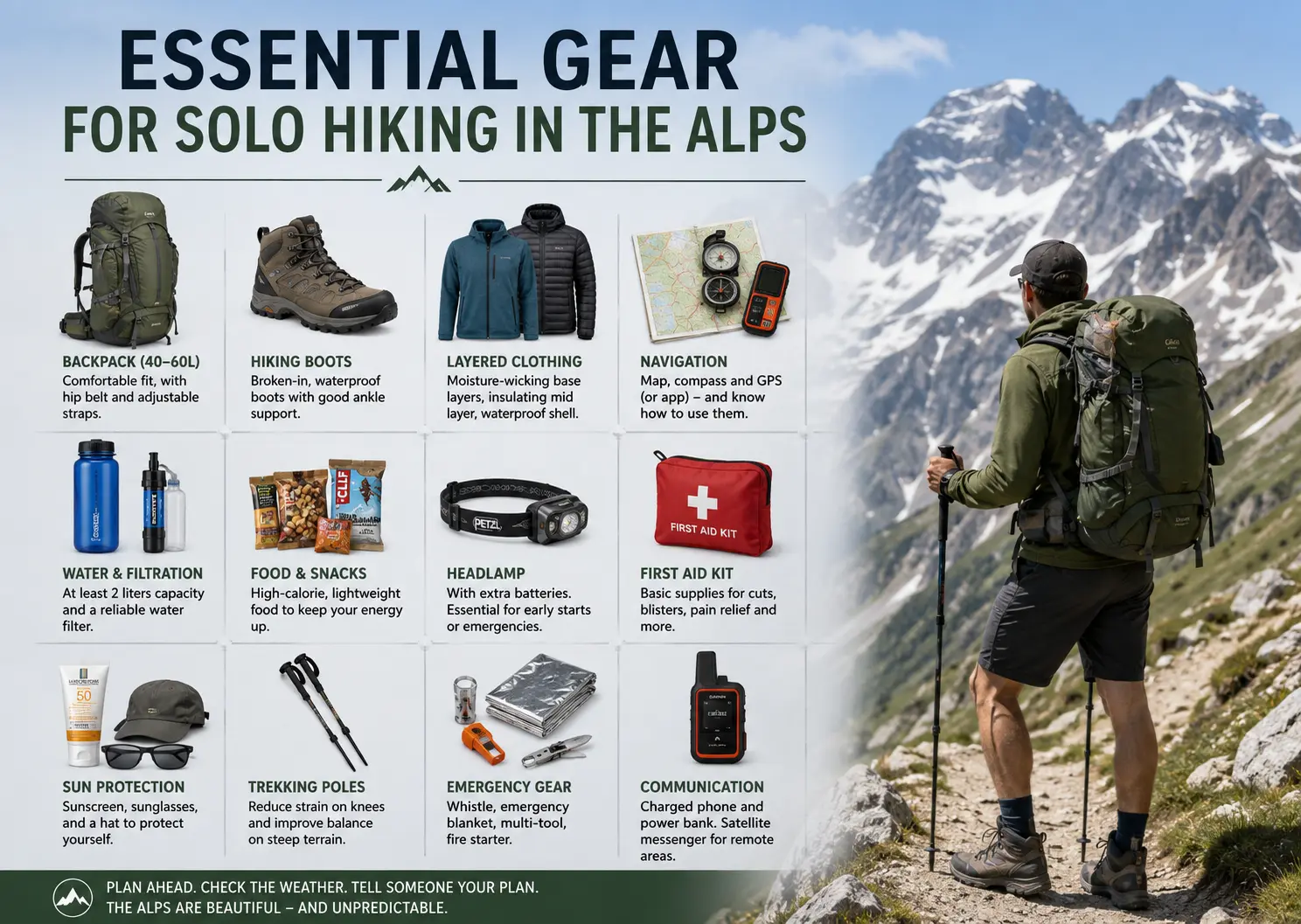
3. Essential Gear for Solo Hiking in the Alps
Essential Gear for Solo Hiking in the Alps
Pack as if you’ll spend an unplanned night out. Your solo safety net is your backpack.
Don’t leave the trailhead without:
Offline maps (download Organic Maps or Maps.me for the entire valley)
A power bank (10,000 mAh minimum)
Emergency bivy bag (weighs 200g, saves lives)
Whistle and mirror more reliable than a phone at altitude
🧷 Save‑worthy quote: “A solo hiker’s backpack is their rescue team. Pack like you’re responsible for someone you love because you are.”
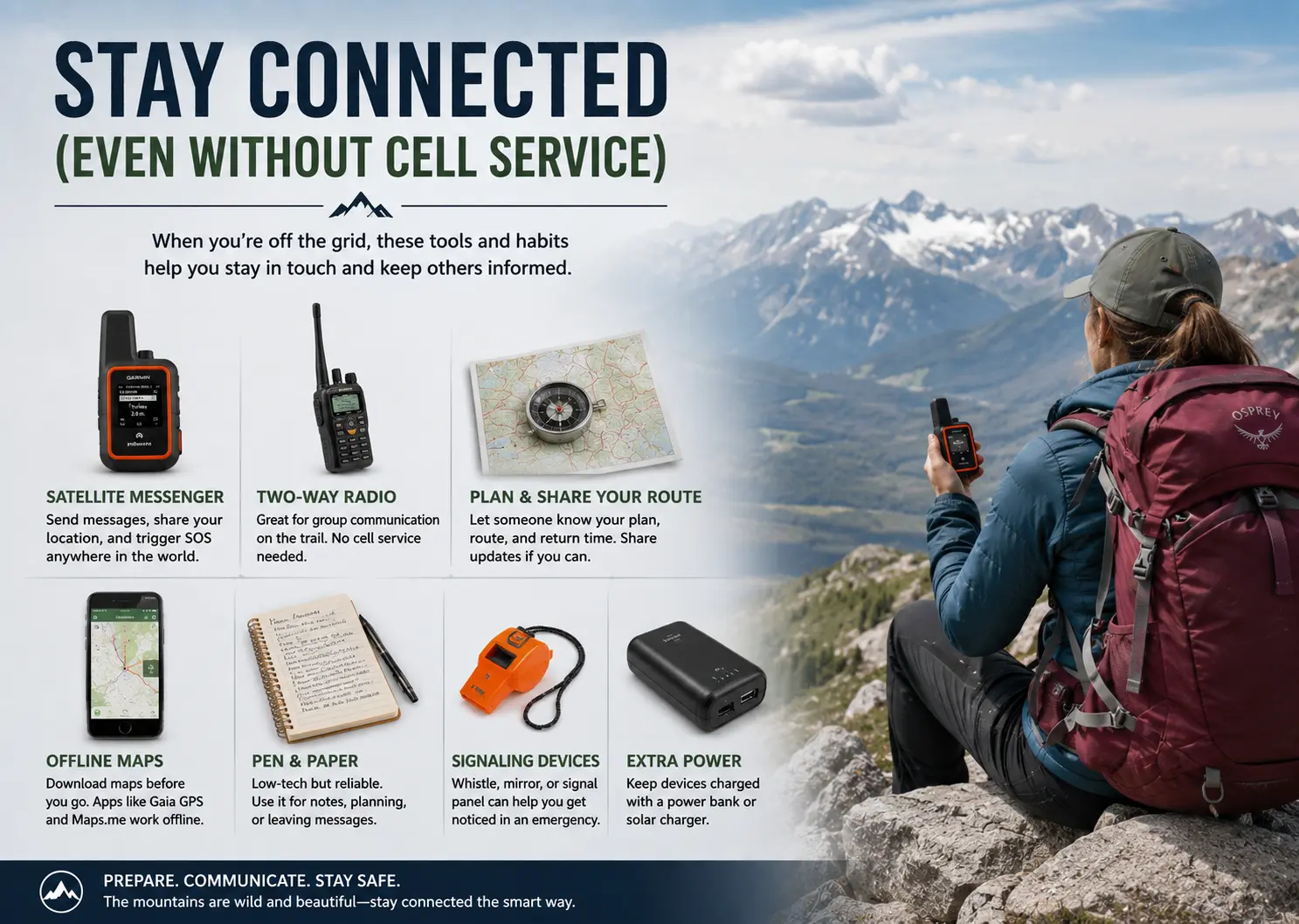
4. Stay Connected (Even Without Cell Service)
Stay Connected (Even Without Cell Service)
Many Alpine valleys have zero signal. That’s okay – you have options.
Smart solo strategies:
Rent a Garmin inReach or Zoleo satellite messenger (from €12/day)
Share your exact route plan with a friend, including which huts you’ll sleep at
Use What3Words app emergency services in Switzerland and Austria now use it
I’ve used a satellite messenger on every solo trek. The €12 is cheaper than regret.
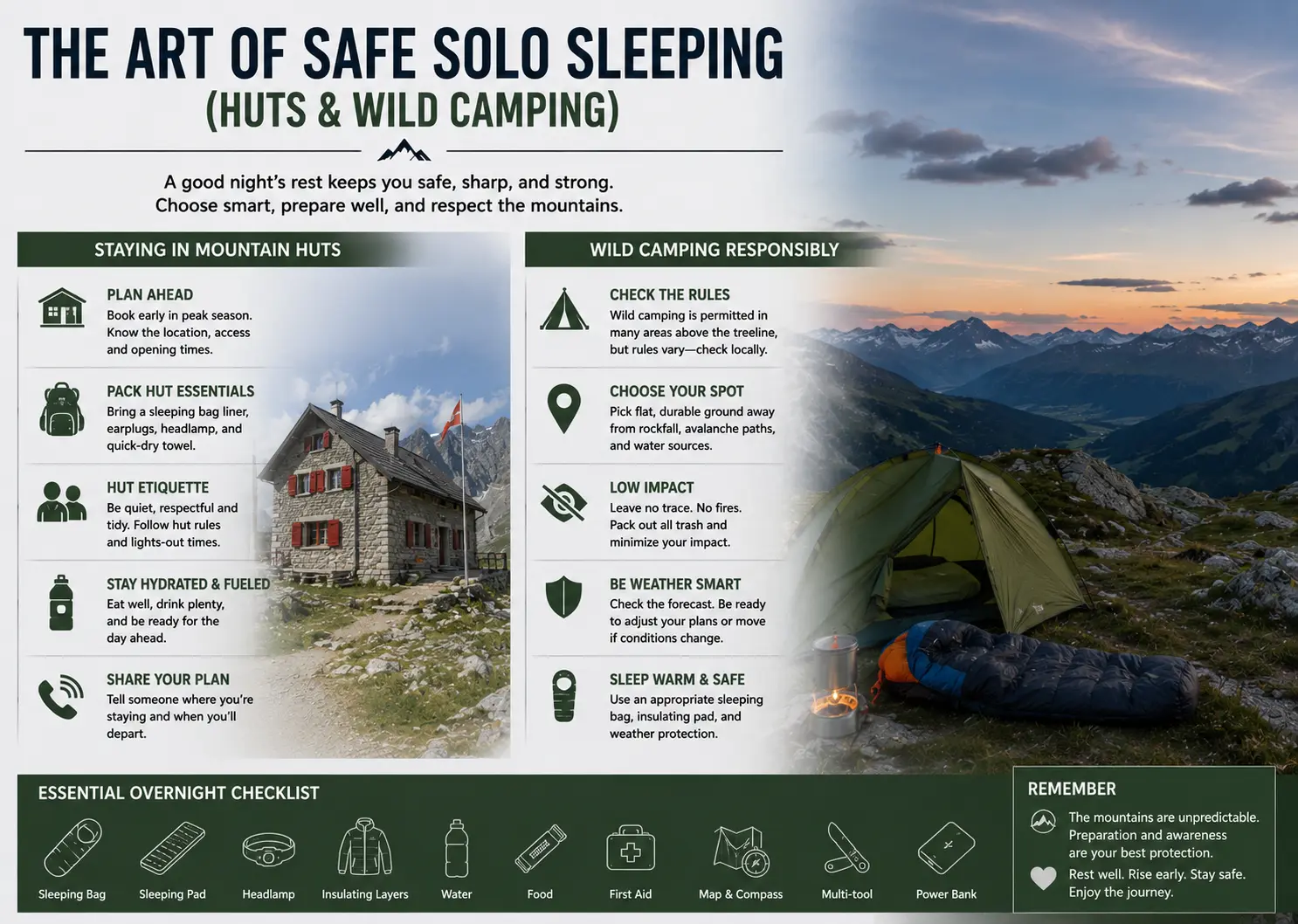
5. The Art of Safe Solo Sleeping (Huts & Wild Camping)
The Art of Safe Solo Sleeping (Huts & Wild Camping)
Mountain huts are a solo hiker’s best friend. You get a warm meal, a bunk bed, and instant trail friends.
Hut etiquette for solo hikers:
Book 2 ,4 weeks ahead for popular huts (July‑September)
Bring hut slippers (flip-flops) and a silk sleeping bag liner
Eat the “hut spaghetti”; it’s always surprisingly good
Wild camping is allowed above the treeline in most of the Alps, but never solo on your first trip. Stick to huts until you know the terrain.
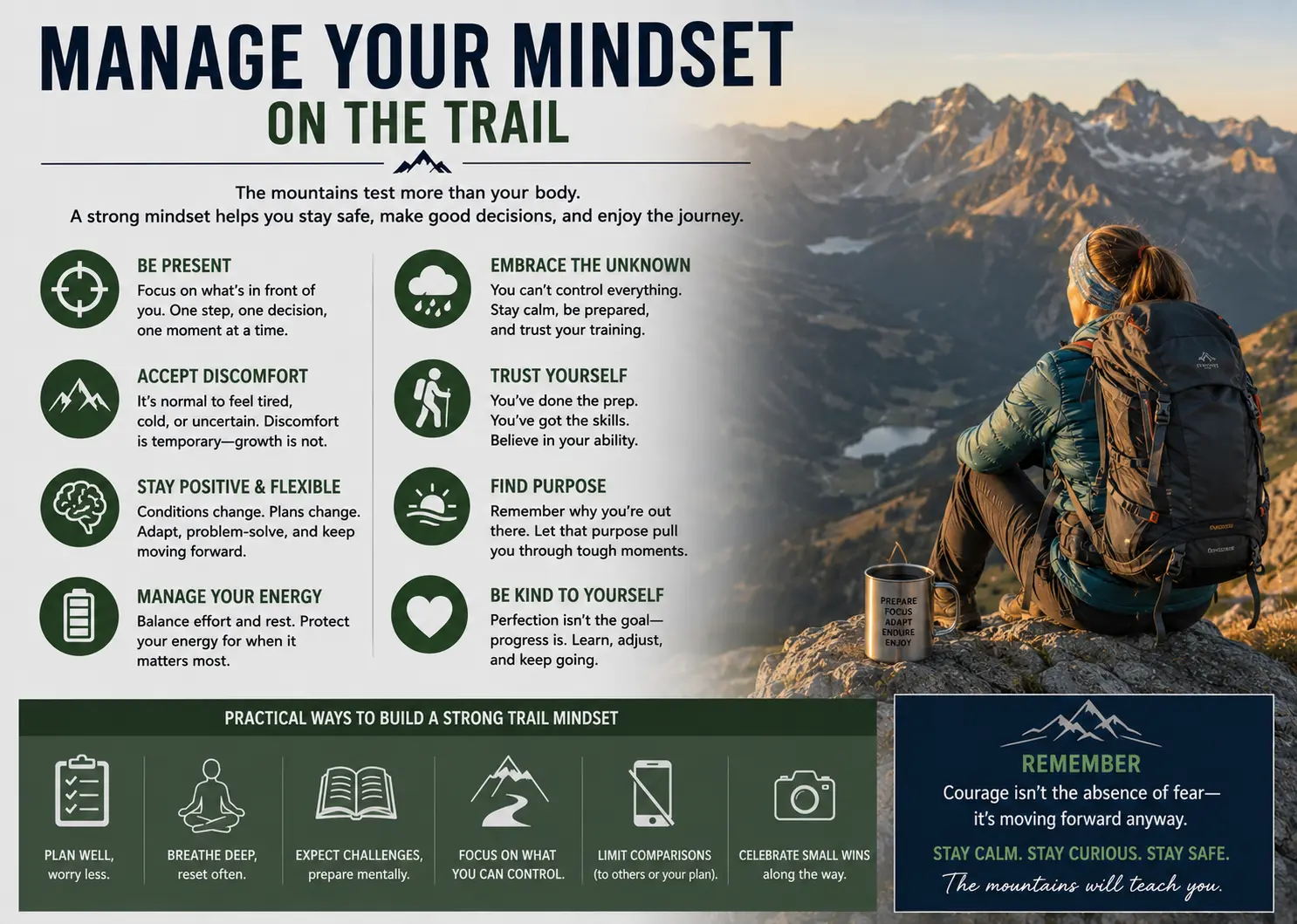
6. Manage Your Mindset on the Trail
Manage Your Mindset on the Trail
Solo hiking is 80% mental. That little voice saying “you can’t” will show up around hour 4.
What helps:
Break your day into 3 “chunks” (morning / lunch peak / afternoon descent)
Listen to one podcast episode (download before) saves your battery
Set a “check-in alarm” every 90 minutes to drink water and feel proud
You’ll discover something beautiful alone in the Alps: you are great company.
🧷 Pin‑worthy reminder: “Solo hiking in the Alps isn’t about being brave. It’s about being prepared enough that bravery isn’t required.”
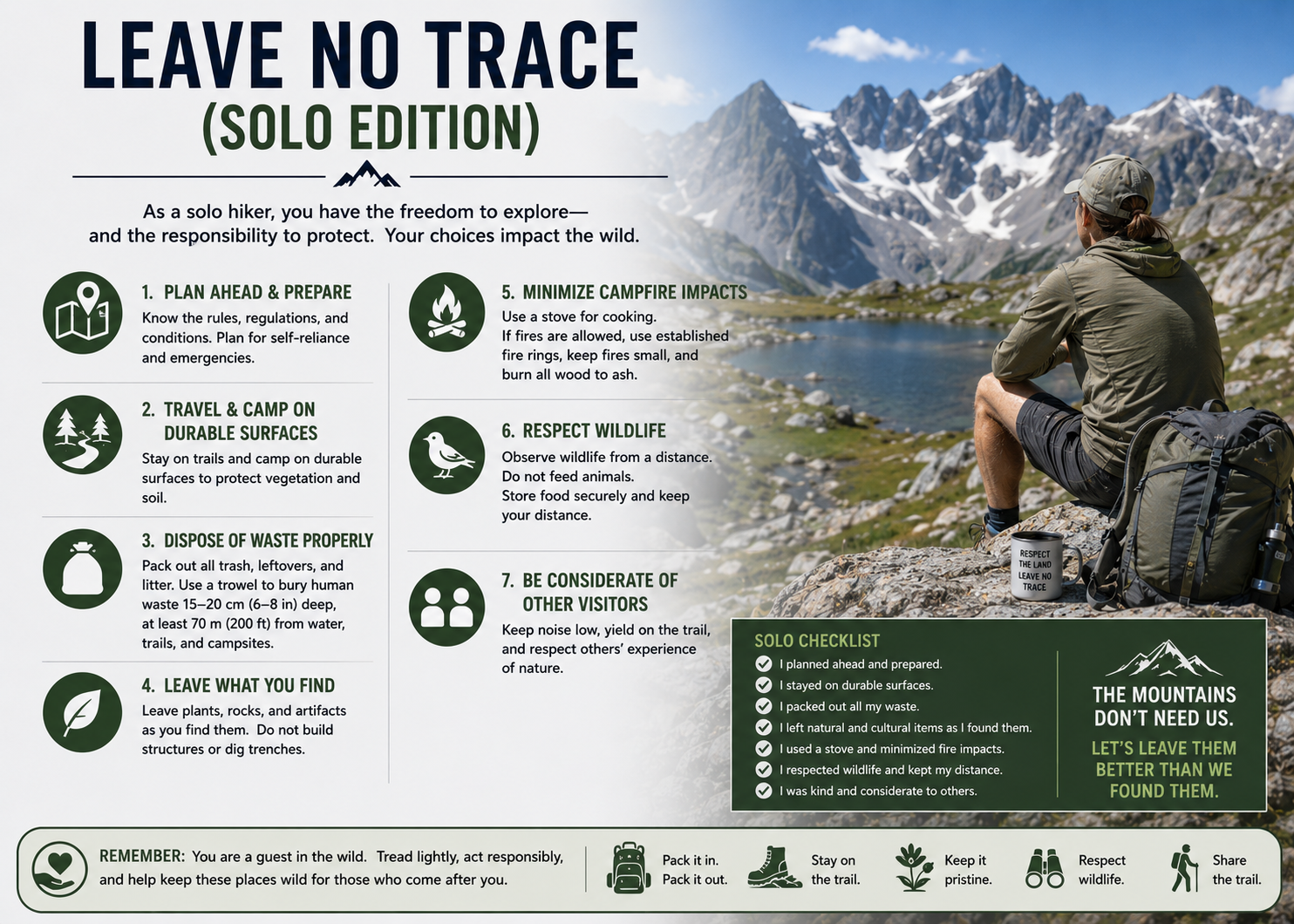
7. Leave No Trace (Solo Edition)
Leave No Trace (Solo Edition)
When you hike alone, you leave a smaller footprint but also have no one to remind you to pick up that granola wrapper.
Your solo LNT pledge:
Carry a Ziploc for all trash (even apple cores; they’re not native to alpine zones)
Stick to marked trails; eroding switchbacks is dangerous for those behind you
Use hut toilets or dig a cathole 100m from water, 15cm deep
The Alps are a shared treasure. As a solo traveler, you become its temporary guardian.
Now I want to hear from you: Where would you go for your first solo hiking in the Alps? Drop a comment below with your dream trail or any question you still have. I reply to every solo hiker. 👇
Solo hiking in the Alps is safer and easier than you think. 🏔️ These 7 tips cover trails, gear, huts & mindset. Save this for your next solo adventure! #SoloHikingAlps #AlpineHiking #SoloFemaleTravel
Denis Andrew has spent over a decade mastering the craft of custom stamp-making. As the founder of Solo Stamp, he personally designs, engraves, and tests every single stamp that leaves the Scottsdale workshop.
Denis is a recognized expert in:
Precision laser‑engraved rubber and photopolymer plates
Notary seals & embossers (state‑compliant)
Custom logo stamps for retail, legal, and creative industries
Ink chemistry and substrate compatibility (paper, fabric, wax, wood)
His philosophy is simple: no mass production, no shortcuts. Every stamp is calibrated for a clean, even impression — guaranteed.
Denis has consulted for small businesses and national brands alike, always prioritizing turnaround time without sacrificing detail. When you email admin@solostamp.com, you’re talking directly to the craftsman who will build your stamp.
📍 Based in Scottsdale, Arizona – serving clients nationwide.