
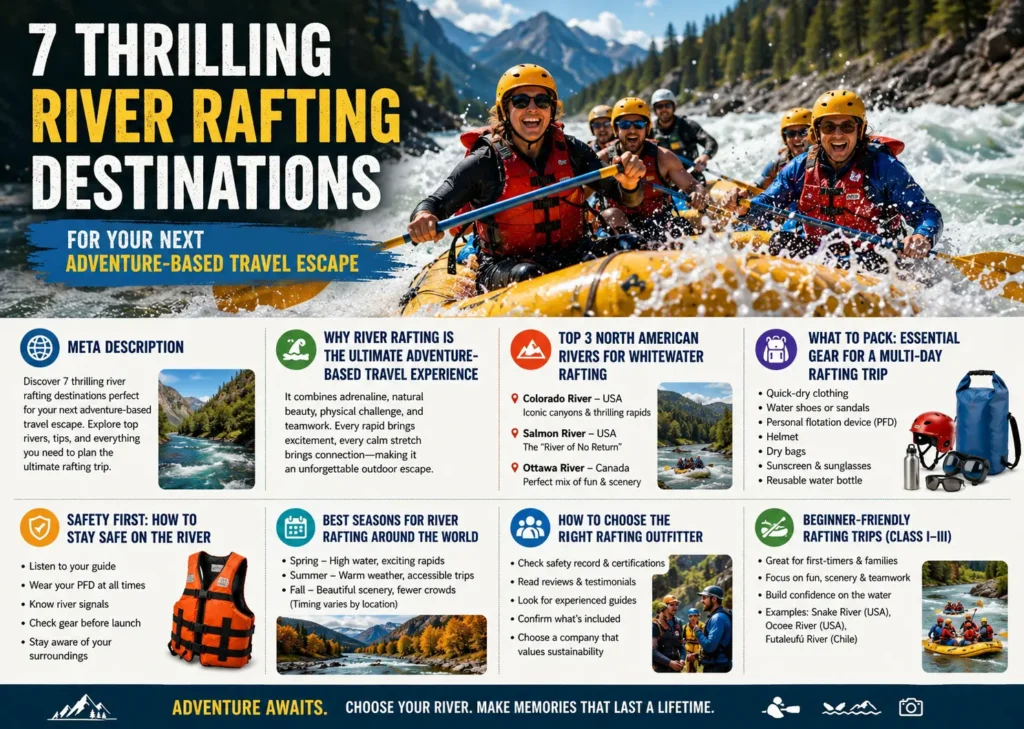

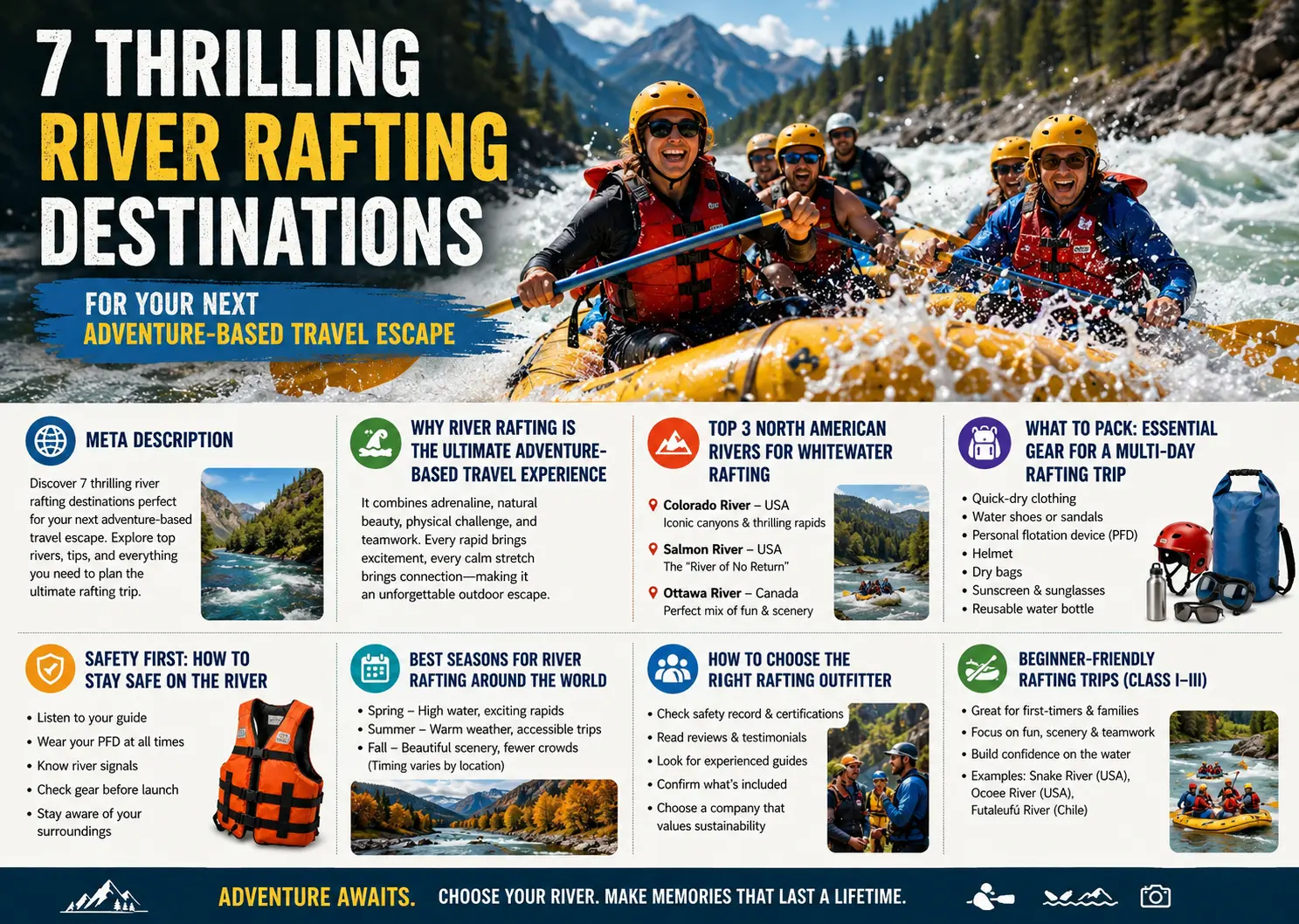
Ready for river rafting adventure based travel? Discover 7 heart-pumping destinations, expert safety tips, and how to plan your ultimate whitewater trip.
You’ve been dreaming of an adventure that gets your blood pumping and your spirit soaring. But maybe you’re tired of the same old hiking trails or beach vacations. You want something raw, real, and unforgettable.
That’s where river rafting adventure-based travel comes in. It’s the perfect mix of adrenaline, nature, and teamwork. In this guide, you’ll discover the best rivers to raft, what to pack, and how to stay safe so you can finally turn that dream trip into reality. Let’s dive in.
1. Why River Rafting Is the Ultimate Adventure-Based Travel Experience
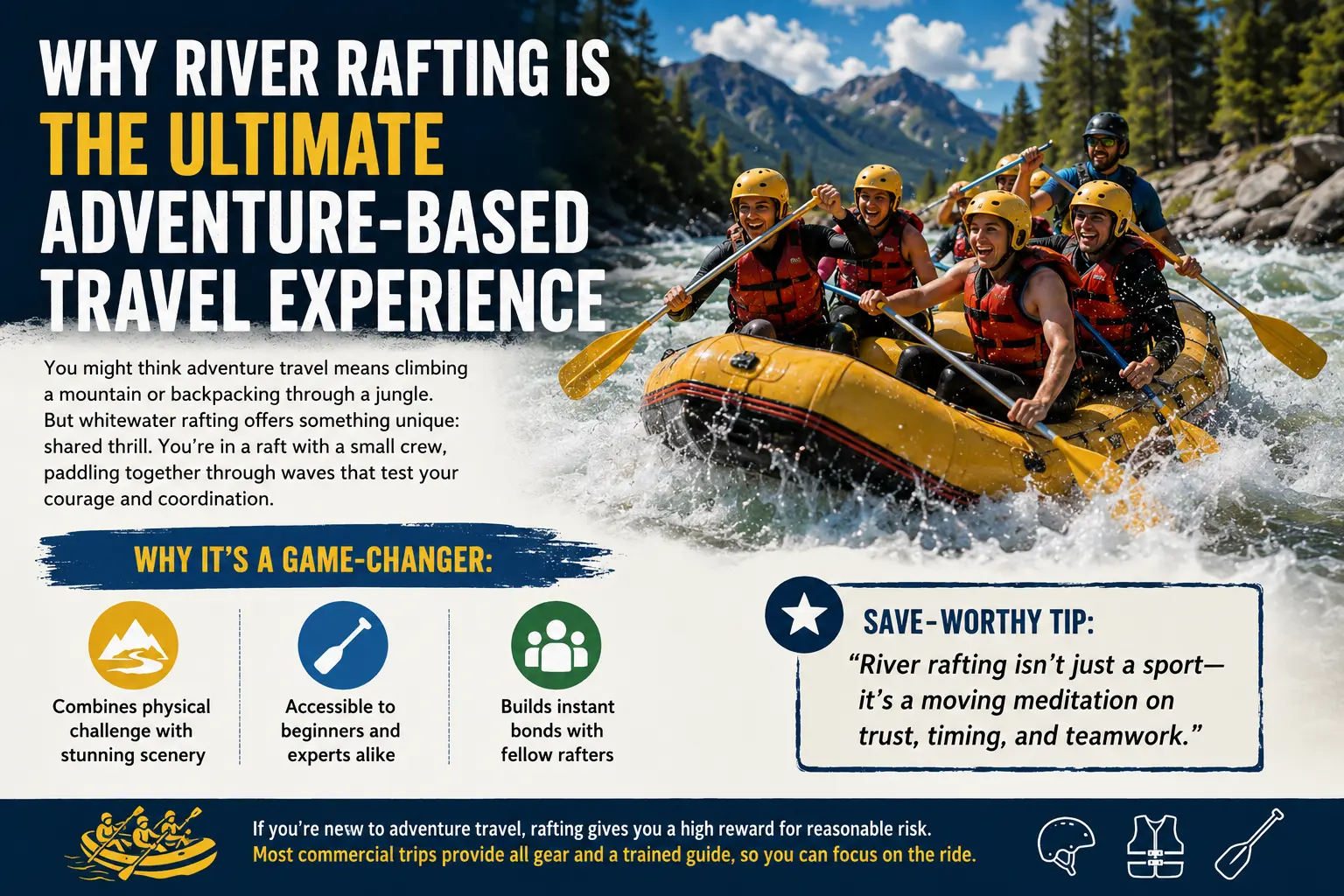
You might think adventure travel means climbing a mountain or backpacking through a jungle. But whitewater rafting offers something unique: a shared thrill. You’re in a raft with a small crew, paddling together through waves that test your courage and coordination.
Why it’s a game-changer:
- Combines physical challenge with stunning scenery
- Accessible to beginners and experts alike
- Builds instant bonds with fellow rafters
Save-worthy tip: “River rafting isn’t just a sport it’s a moving meditation on trust, timing, and teamwork.”
If you’re new to adventure travel, rafting gives you a high reward for reasonable risk. Most commercial trips provide all gear and a trained guide, so you can focus on the ride.
2. Top 3 North American Rivers for Whitewater Rafting
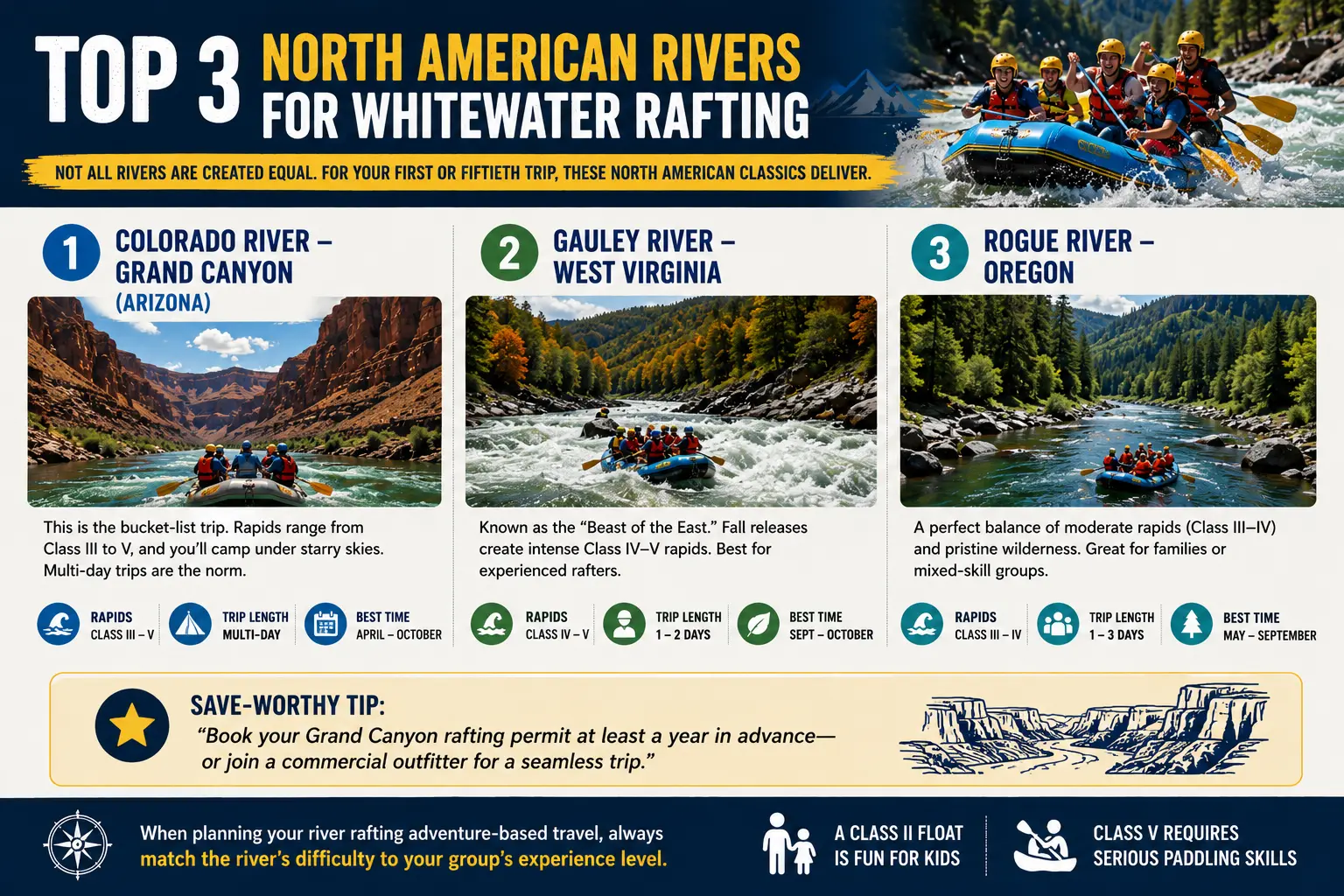
Not all rivers are created equal. For your first or fiftieth trip, these North American classics deliver.
1. Colorado River – Grand Canyon (Arizona)
This is the bucket-list trip. Rapids range from Class III to V, and you’ll camp under starry skies. Multi-day trips are the norm.
2. Gauley River – West Virginia
Known as the “Beast of the East.” Fall releases create intense Class IV–V rapids. Best for experienced rafters.
3. Rogue River – Oregon
A perfect balance of moderate rapids (Class III–IV) and pristine wilderness. Great for families or mixed-skill groups.
Save-worthy tip: “Book your Grand Canyon rafting permit at least a year in advance—or join a commercial outfitter for a seamless trip.”
When planning your river rafting adventure-based travel, always match the river’s difficulty to your group’s experience level. A Class II float is fun for kids; Class V requires serious paddling skills
3. What to Pack: Essential Gear for a Multi Day Rafting Trip
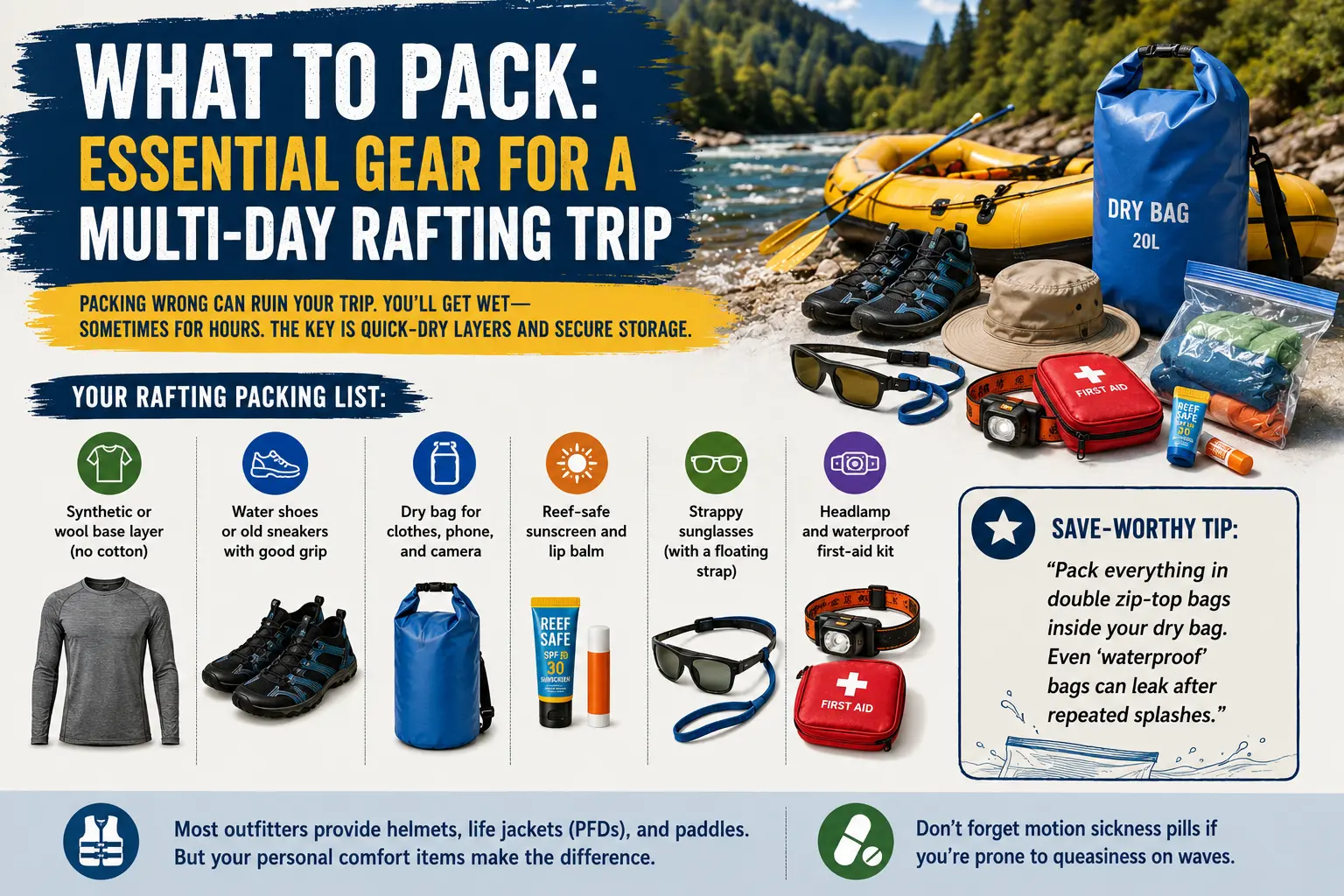
Packing wrong can ruin your trip. You’ll get wet sometimes for hours. The key is quick-dry layers and secure storage.
Your rafting packing list:
- Synthetic or wool base layer (no cotton)
- Water shoes or old sneakers with good grip
- Dry bag for clothes, phone, and camera
- Reef-safe sunscreen and lip balm
- Strappy sunglasses (with a floating strap)
- Headlamp and waterproof first-aid kit
Save-worthy tip: “Pack everything in double zip-top bags inside your dry bag. Even ‘waterproof’ bags can leak after repeated splashes.”
Most outfitters provide helmets, life jackets (PFDs), and paddles. But your personal comfort items make the difference. Don’t forget motion sickness pills if you’re prone to queasiness on waves.
4. Safety First: How to Stay Safe on the River
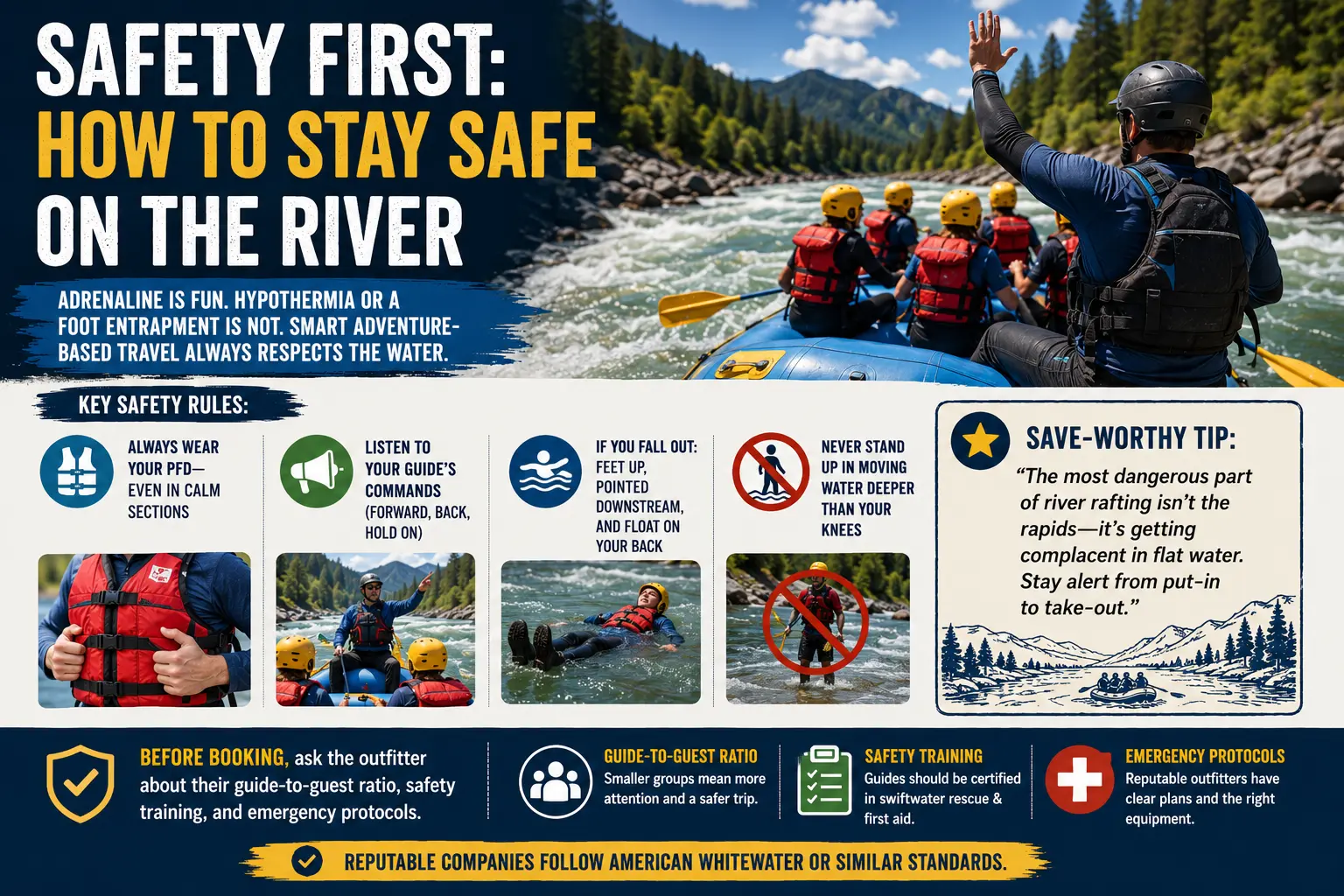
Adrenaline is fun. Hypothermia or foot entrapment is not. Smart adventure based travel always respects the water.
Key safety rules:
- Always wear your PFD even in calm sections
- Listen to your guide’s commands (forward, back, hold on)
- If you fall out: feet up, pointed downstream, and float on your back
- Never stand up in moving water deeper than your knees
Save-worthy tip: “The most dangerous part of river rafting isn’t the rapids it’s getting complacent in flat water. Stay alert from put-in to take-out.”
Before booking, ask the outfitter about their guide-to-guest ratio, safety training, and emergency protocols. Reputable companies follow American Whitewater or similar standards.
5. Best Seasons for River Rafting Around the World
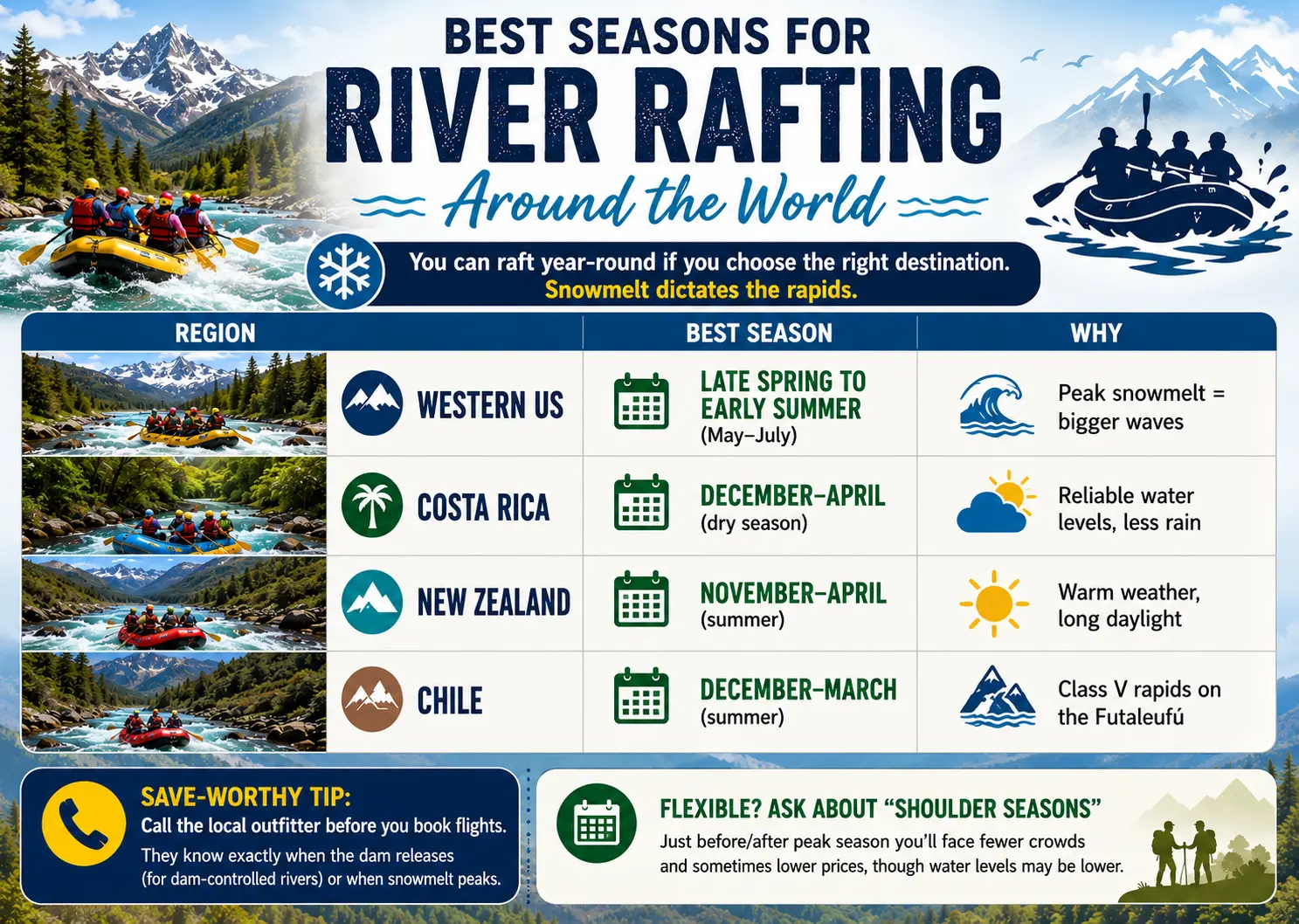
You can raft year‑round if you choose the right destination. Snowmelt dictates the rapids.
| Region | Best Season | Why |
|---|---|---|
| Western US | Late spring to early summer (May–July) | Peak snowmelt = bigger waves |
| Costa Rica | December–April (dry season) | Reliable water levels, less rain |
| New Zealand | November–April (summer) | Warm weather, long daylight |
| Chile | December–March (summer) | Class V rapids on the Futaleufú |
Save-worthy tip: “Call the local outfitter before you book flights. They know exactly when the dam releases (for dam-controlled rivers) or when snowmelt peaks.”
If you’re flexible, ask about “shoulder seasons” (just before/after peak). You’ll face fewer crowds and sometimes lower prices, though water levels may be lower.
6. How to Choose the Right Rafting Outfitter
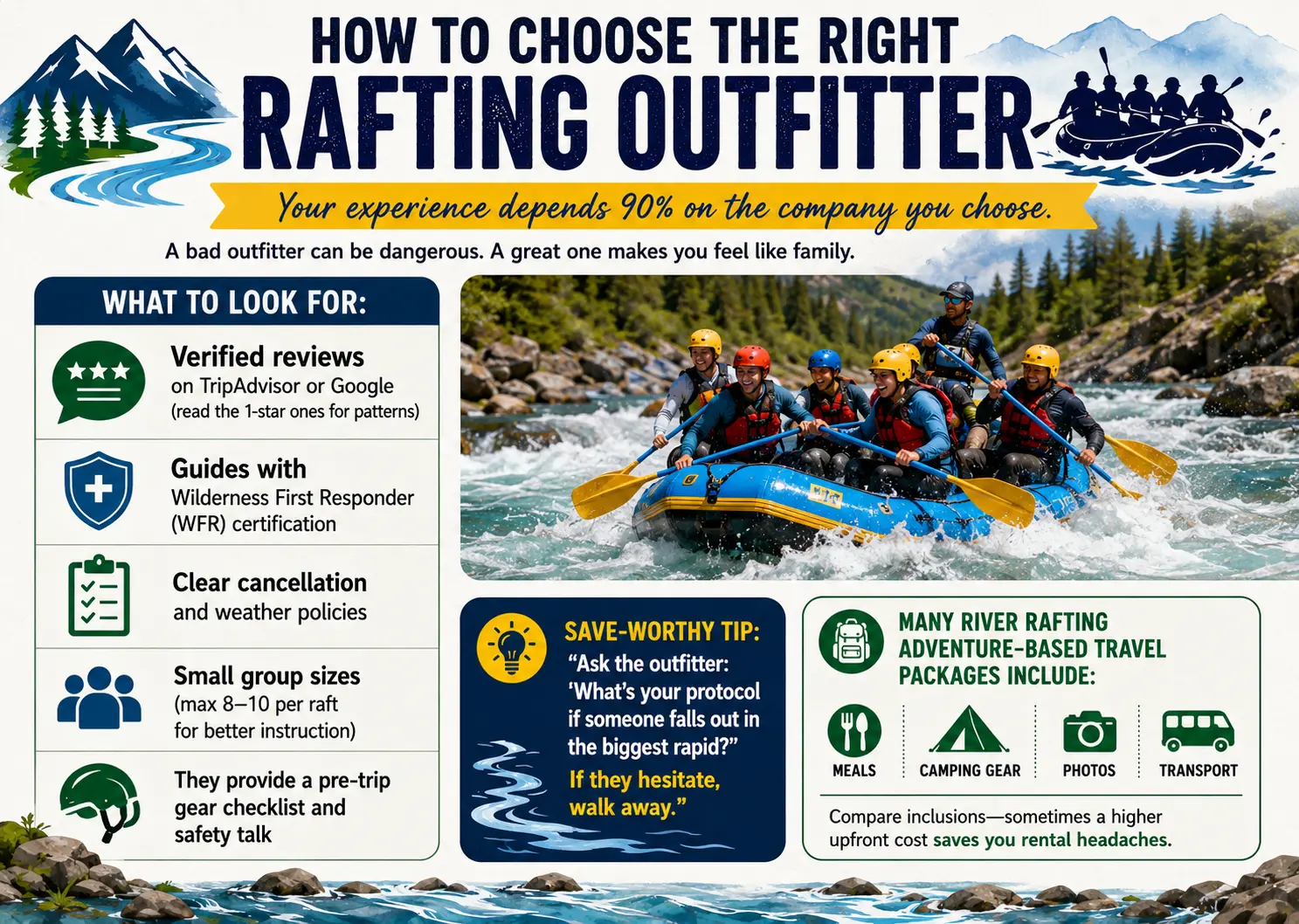
Your experience depends 90% on the company you choose. A bad outfitter can be dangerous. A great one makes you feel like family.
What to look for:
- Verified reviews on TripAdvisor or Google (read the 1-star ones for patterns)
- Guides with Wilderness First Responder (WFR) certification
- Clear cancellation and weather policies
- Small group sizes (max 8–10 per raft for better instruction)
- They provide a pre-trip gear checklist and safety talk
Save-worthy tip: “Ask the outfitter: ‘What’s your protocol if someone falls out in the biggest rapid?’ If they hesitate, walk away.”
Many river rafting adventure-based travel packages include meals, camping gear, and even photos. Compare inclusions; sometimes a higher upfront cost saves you rental headaches.
7. Beginner Friendly Rafting Trips (Class I–III)
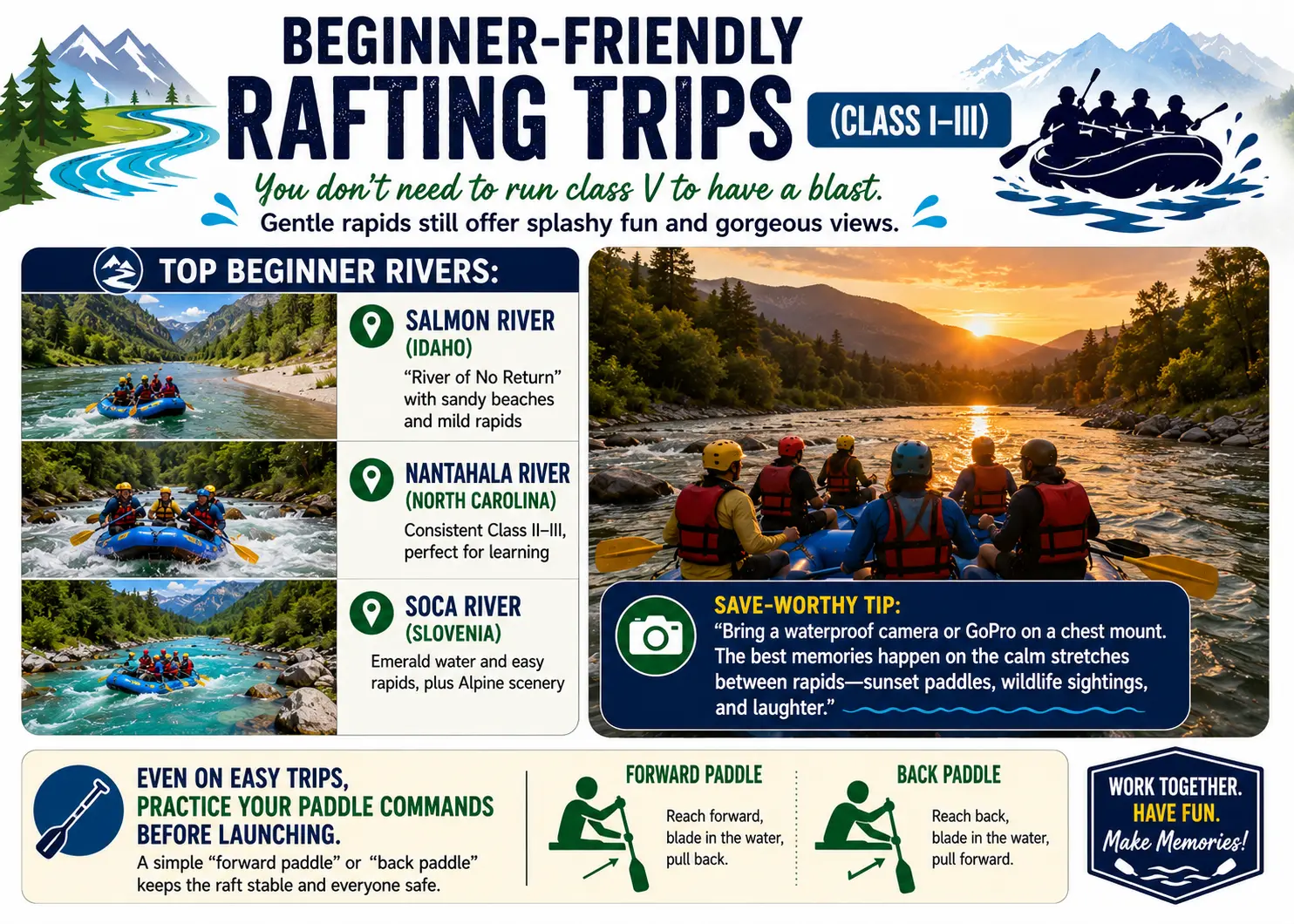
You don’t need to run class V to have a blast. Gentle rapids still offer splashy fun and gorgeous views.
Top beginner rivers:
- Salmon River (Idaho) – “River of No Return” with sandy beaches and mild rapids
- Nantahala River (North Carolina) – Consistent Class II–III, perfect for learning
- Soca River (Slovenia) – Emerald water and easy rapids, plus Alpine scenery
Save-worthy tip: “Bring a waterproof camera or GoPro on a chest mount. The best memories happen on the calm stretches between rapids—sunset paddles, wildlife sightings, and laughter.”
Even on easy trips, practice your paddle commands before launching. A simple “forward paddle” or “back paddle” keeps the raft stable and everyone safe.
Ready to trade your screen for a paddle? Your first river rafting adventure based travel trip is closer than you think.
👉 Share this article with your adventure crew and start planning together.
👉 Comment below: Which river would you run first?
👉 Save this post on Pinterest so you never lose these destination ideas.
Let’s chase those rapids. You’ve got this.
Pin Description
River rafting is the ultimate adventure-based travel for thrill seekers. From the Grand Canyon to Costa Rica, discover 7 epic destinations + essential safety tips. Save this guide for your next whitewater trip! #RiverRafting #AdventureTravel #WhitewaterRafting


